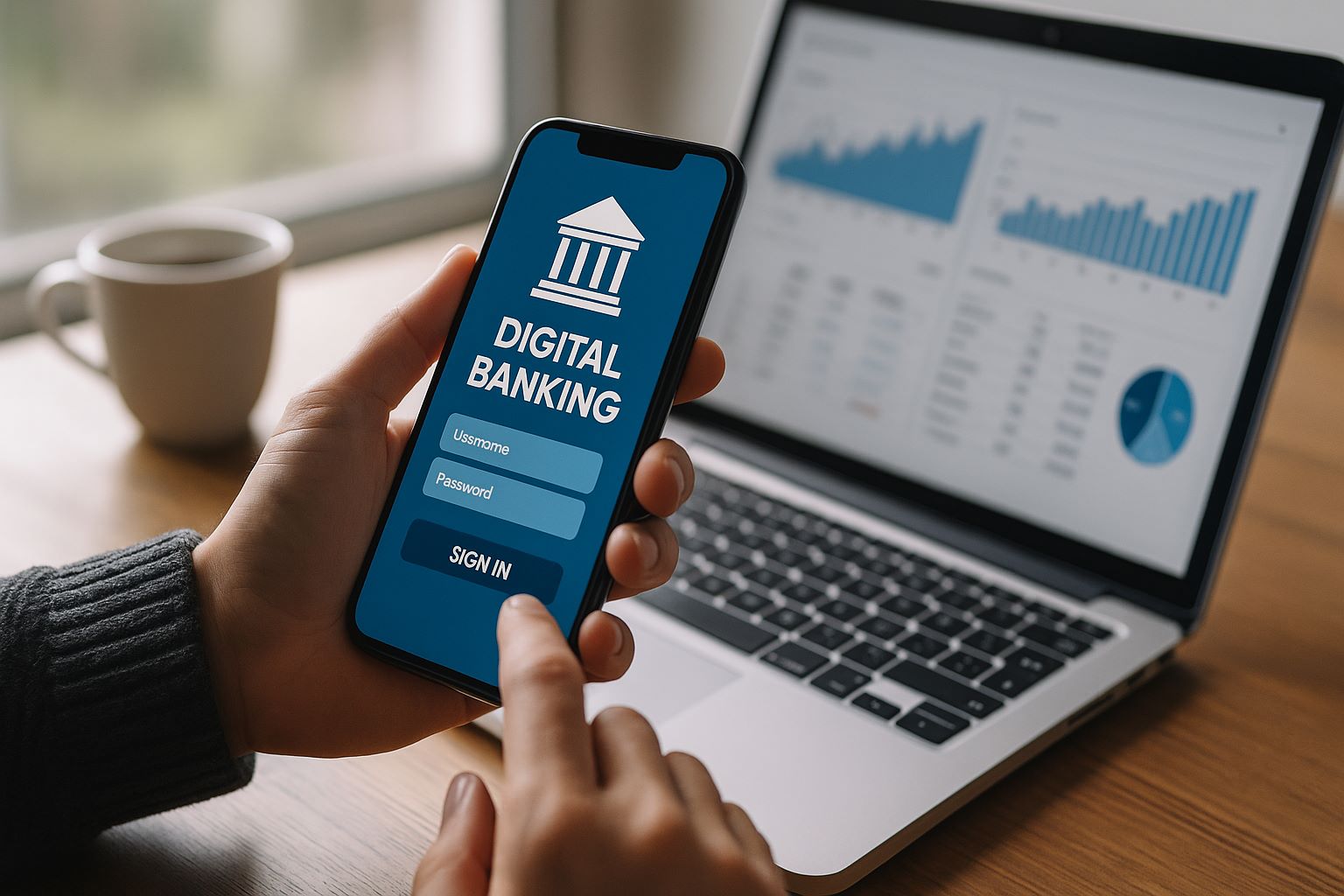
Over the past decade, digital banking has revolutionized the way people manage their money. Gone are the days when you had to stand in long queues or fill out endless forms just to open an account or transfer funds. Today, with just a few taps on your smartphone, you can make transactions, pay bills, invest, and even apply for loans — all without ever stepping into a bank branch.
Thank you for reading this post, don't forget to subscribe!This rapid shift towards technology-driven financial services has not only made banking more convenient but has also transformed the global financial ecosystem. From mobile apps to artificial intelligence, digital banking is leading the way toward a smarter, faster, and more inclusive financial future.
In this article, we’ll explore how digital banking evolved, the technologies powering it, its benefits, challenges, and what the future holds for the financial world.
1. What Is Digital Banking?
Digital banking refers to the use of technology to deliver traditional banking services through online and mobile platforms. It allows users to access financial products, transfer money, and manage accounts anytime, anywhere — without physical interaction.
Types of Digital Banking
- Online Banking: Access through web portals using computers.
- Mobile Banking: Bank services through smartphone apps.
- Neobanks (Digital-Only Banks): Banks that operate entirely online with no physical branches.
Popular examples include Revolut, Chime, Monzo, N26, and Nubank, which offer innovative and user-friendly digital financial experiences.
2. The Evolution of Digital Banking
Early Beginnings
The concept of digital banking began in the 1990s when banks introduced online banking portals to allow customers to view balances and transfer funds.
The Mobile Revolution
With the rise of smartphones in the 2000s, banking became even more accessible. Mobile banking apps made transactions faster and introduced real-time updates and notifications.
The Fintech Explosion
The 2010s saw the rise of fintech startups — companies blending finance and technology to offer better, cheaper, and faster banking solutions. These players pushed traditional banks to modernize and innovate.
Today
Digital banking has evolved into an ecosystem that combines AI, blockchain, cloud computing, and big data analytics, reshaping how we interact with money.
3. The Technologies Driving Digital Banking
Several cutting-edge technologies are powering this financial transformation.
1. Artificial Intelligence (AI) and Machine Learning
AI enables banks to:
- Offer personalized financial advice through chatbots and virtual assistants.
- Detect fraudulent transactions in real-time.
- Analyze customer data to predict needs and spending behavior.
Example: Chatbots like Erica (Bank of America) and Eno (Capital One) assist customers 24/7.
2. Blockchain Technology
Blockchain provides secure, transparent, and tamper-proof transaction records.
It’s the foundation for cryptocurrencies and DeFi (Decentralized Finance), reducing reliance on intermediaries and enhancing trust in digital transactions.
3. Cloud Computing
Banks are moving data and operations to the cloud to improve flexibility, reduce costs, and increase data security. Cloud infrastructure allows instant scalability and supports large-scale digital services.
4. Big Data Analytics
Banks collect massive amounts of data from customers. With big data, they can:
- Understand customer habits and preferences.
- Create tailored financial products.
- Improve risk management and credit scoring models.
5. Biometric Security
Traditional passwords are being replaced by fingerprint, facial, and voice recognition technologies, making digital banking more secure and user-friendly.
6. Open Banking APIs
Open banking allows third-party developers to build apps and services around banks using secure data-sharing protocols.
This innovation encourages competition, transparency, and customer empowerment.
4. Benefits of Digital Banking
The rise of digital banking offers countless advantages to both consumers and financial institutions.
1. Convenience and Accessibility
You can open an account, transfer money, or apply for loans 24/7 — without visiting a branch. Banking has never been more accessible, especially for people in remote areas.
2. Speed and Efficiency
Transactions that used to take days now happen in seconds. From instant payments to automated bill reminders, digital banking has made financial management lightning fast.
3. Lower Costs
Digital banks operate without physical branches, reducing operational expenses. As a result, customers benefit from lower fees, higher interest rates on savings, and cheaper loan options.
4. Personalized Banking Experience
Through AI and data analytics, banks can now offer customized insights, spending reports, and recommendations to help users manage their money better.
5. Enhanced Security
With features like two-factor authentication (2FA), biometric verification, and real-time alerts, digital banking platforms are far more secure than traditional paper-based systems.
6. Financial Inclusion
One of the greatest achievements of digital banking is bringing financial services to the unbanked population.
In many developing regions, mobile banking has become a lifeline for millions who previously lacked access to traditional banks.
5. How Digital Banking Is Changing the Financial Industry
The impact of digital banking extends far beyond convenience. It is redefining the very structure of the financial industry.
1. Traditional Banks Are Adapting
To stay competitive, traditional banks are heavily investing in digital transformation — launching apps, automating services, and partnering with fintech startups.
2. Rise of Neobanks
Neobanks operate entirely online and appeal to tech-savvy users who want simple, transparent banking without hidden fees. They often provide superior user experiences compared to traditional institutions.
3. Empowered Customers
Customers now expect faster service, personalized solutions, and transparency. Digital banking gives them control over their finances like never before.
4. Growth of Digital Payments
From Apple Pay and Google Pay to PayPal and Venmo, digital payment systems have made cash almost obsolete. Peer-to-peer (P2P) transfers and contactless payments dominate modern transactions.
5. Global Reach
Digital banking has erased geographical barriers — anyone with an internet connection can manage money, invest internationally, or send cross-border payments instantly.
6. Challenges of Digital Banking
While digital banking has transformed finance, it also brings new risks and challenges.
1. Cybersecurity Threats
Hackers are constantly finding new ways to exploit systems. Banks must invest heavily in cybersecurity, encryption, and fraud detection.
2. Digital Illiteracy
Not everyone is comfortable using digital tools, especially older generations or people in underdeveloped regions.
3. Data Privacy Concerns
The more data banks collect, the greater the risk of data breaches. Protecting customer information is a top priority.
4. Regulatory Hurdles
Governments and regulators are still adapting to digital innovations. Compliance and licensing remain major challenges for global fintech companies.
5. Lack of Human Interaction
Some customers still prefer personal relationships with bankers. Digital platforms must balance automation with human touchpoints to maintain trust.
7. The Future of Digital Banking
The journey of digital banking is far from over — it’s just beginning.
Here are some trends shaping the future of finance:
1. AI-Powered Financial Coaching
Future banking apps will act as smart financial advisors, automatically analyzing spending patterns and suggesting ways to save or invest.
2. Integration with the Metaverse
Banks may soon offer virtual branches in the metaverse, allowing users to interact with financial advisors through VR technology.
3. Decentralized Finance (DeFi)
Blockchain-based DeFi platforms could challenge traditional banks by offering peer-to-peer lending, insurance, and investing — all without intermediaries.
4. Central Bank Digital Currencies (CBDCs)
Governments are exploring digital versions of national currencies to enhance transparency and speed in financial systems.
5. Sustainable and Ethical Banking
Digital banks are leading efforts toward green finance, supporting eco-friendly initiatives and transparent ethical investing.
8. How to Embrace the Digital Banking Revolution
If you haven’t fully transitioned to digital banking yet, now’s the time. Here’s how to do it safely and effectively:
1. Choose Reputable Banks and Apps
Stick with licensed banks and fintech platforms regulated by recognized authorities.
2. Enable Strong Security Features
Use two-factor authentication, strong passwords, and biometric logins.
3. Regularly Monitor Your Accounts
Check for suspicious transactions and set up alerts to stay informed in real time.
4. Stay Educated
Keep learning about new technologies and security practices to make the most of digital tools.
9. The Economic Impact of Digital Banking
Digital banking has reshaped economies by:
- Boosting financial inclusion in developing nations.
- Encouraging entrepreneurship through digital payments.
- Reducing costs for businesses and consumers alike.
- Accelerating innovation in financial products and services.
It has become a cornerstone of the global digital economy, empowering both individuals and enterprises.
10. Conclusion
The rise of digital banking marks one of the most significant transformations in financial history. What started as simple online portals has evolved into an intelligent, data-driven ecosystem that empowers billions worldwide.
Technology has made banking faster, safer, and more inclusive, bridging the gap between people and financial opportunity.
As we move toward a future defined by AI, blockchain, and open finance, the line between technology and banking will continue to blur — giving rise to a truly borderless financial world.
The key to success lies in embracing innovation responsibly — using technology not just for convenience, but for empowerment, transparency, and financial freedom.