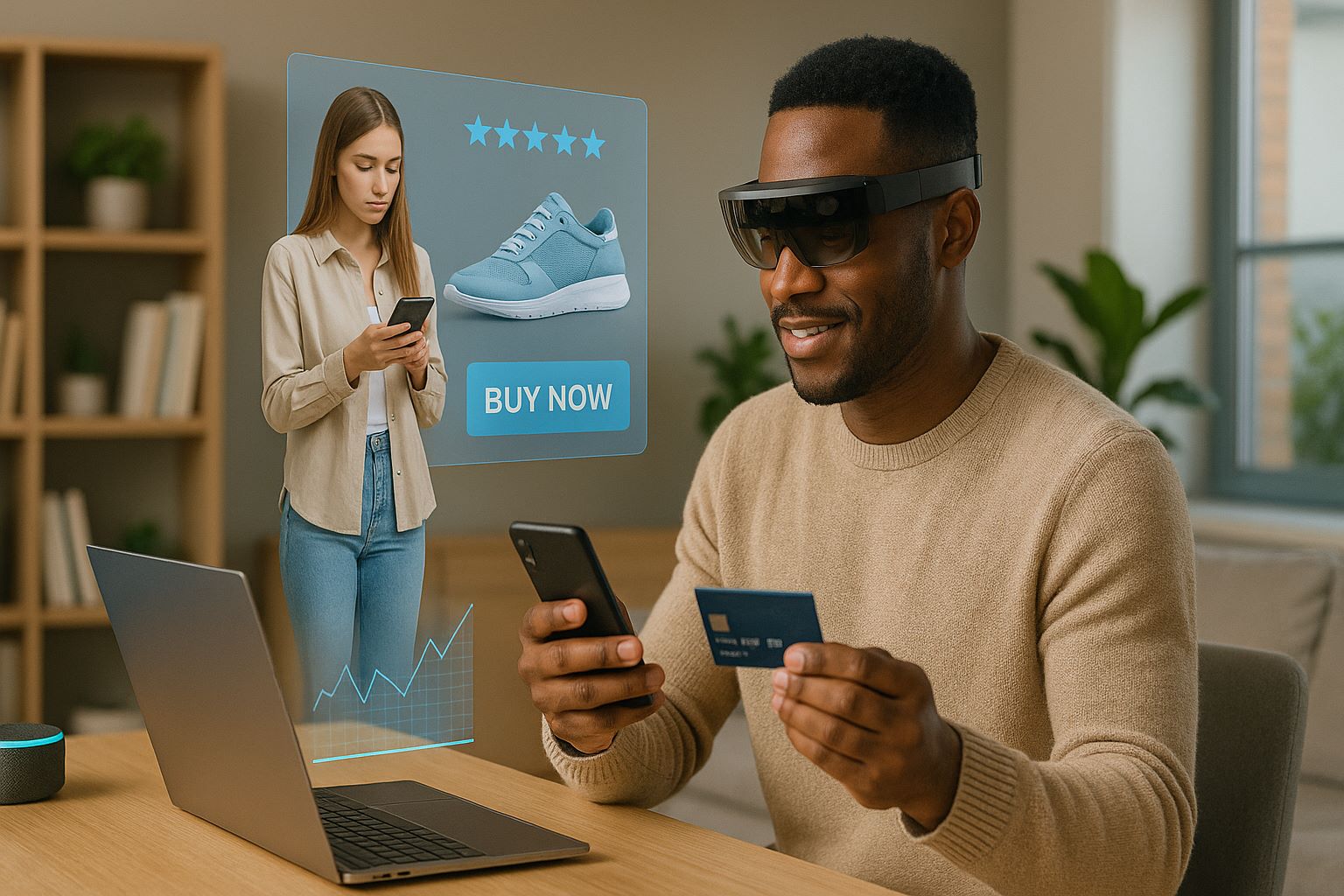
The e-commerce industry has evolved dramatically over the past decade — and it’s showing no signs of slowing down. As we move deeper into 2025, online shopping continues to transform how consumers buy, interact, and engage with brands. From artificial intelligence (AI) and augmented reality (AR) to sustainable shopping and lightning-fast deliveries, e-commerce is entering an era defined by innovation, personalization, and customer-centricity.
Thank you for reading this post, don't forget to subscribe!In this article, we’ll explore the emerging trends shaping the future of e-commerce in 2025, and how businesses can adapt to stay ahead of the competition.
1. Artificial Intelligence (AI) Is Powering Smarter Shopping Experiences
AI is no longer just a buzzword — it’s the backbone of modern e-commerce. In 2025, artificial intelligence plays a crucial role in improving the customer experience, product recommendations, and business efficiency.
AI-powered algorithms analyze customer data — from browsing habits to purchase history — to deliver hyper-personalized product suggestions. This level of personalization increases conversion rates and customer satisfaction.
Moreover, AI-driven chatbots are now capable of providing human-like support 24/7, helping customers find products, track orders, and resolve issues in real time. Predictive analytics also help e-commerce businesses anticipate demand, manage inventory, and optimize pricing strategies.
Example: Amazon’s AI-powered recommendation engine drives up to 35% of its total sales — a clear example of how intelligent automation can boost business performance.
2. Augmented Reality (AR) and Virtual Try-Ons Are Enhancing Online Shopping
One of the biggest challenges in online shopping has always been the inability to physically experience products before purchasing. In 2025, augmented reality (AR) has solved this issue.
From trying on clothes virtually to seeing how a sofa fits in your living room, AR helps bridge the gap between digital and physical shopping. Major brands like IKEA, Sephora, and Nike are already using AR-powered experiences to help customers make confident purchase decisions.
Consumers can now:
- Try on eyewear, makeup, or outfits virtually.
- Preview how furniture or décor will look in their homes.
- Interact with 3D product models before buying.
This immersive technology not only enhances user experience but also reduces return rates — a win-win for both shoppers and sellers.
3. Voice Commerce Is Becoming Mainstream
Voice assistants like Amazon Alexa, Google Assistant, and Apple Siri are reshaping how people shop online. In 2025, voice commerce is estimated to account for billions in global e-commerce sales.
Consumers are now using voice commands to:
- Search for products (“Find me the best wireless earbuds under $100”)
- Reorder favorite items (“Order my usual coffee beans”)
- Track shipments and check order statuses
For businesses, optimizing product listings for voice search SEO is becoming essential. This means using conversational keywords and ensuring product details match natural language queries.
Tip: E-commerce sites that adapt to voice commerce early will gain a competitive advantage in the coming years.
4. Mobile-First Shopping Is Dominating the Market
The rise of smartphones has turned mobile commerce — or m-commerce — into a global powerhouse. In 2025, over 75% of online purchases are expected to occur on mobile devices.
To stay competitive, e-commerce brands must prioritize mobile-friendly websites and responsive design. Fast loading times, simplified checkout processes, and mobile payment options like Apple Pay and Google Wallet are now essential features.
Progressive Web Apps (PWAs) are also becoming popular. They combine the functionality of mobile apps with the accessibility of websites, providing users with a seamless and fast shopping experience without requiring downloads.
5. Sustainable Shopping Is Winning Consumer Trust
Today’s consumers care deeply about sustainability, and that mindset is shaping the future of e-commerce. In 2025, brands that embrace eco-friendly practices are seeing stronger customer loyalty and higher brand value.
Shoppers are actively seeking:
- Sustainable packaging (biodegradable or recyclable materials)
- Ethically sourced products
- Carbon-neutral delivery options
E-commerce companies like Patagonia and Allbirds have built their reputation around sustainability, inspiring other brands to follow suit. Implementing green logistics and transparent supply chains not only helps the planet but also appeals to environmentally conscious buyers.
6. Social Commerce Is Driving Direct Sales Through Social Media
Social media platforms are no longer just places for engagement — they’re full-fledged shopping hubs. Platforms like Instagram, TikTok, and Facebook now offer built-in shopping experiences where users can browse, purchase, and check out without leaving the app.
Influencers and content creators play a huge role in this evolution. Their authentic product recommendations and real-time demonstrations help brands reach niche audiences effectively.
Live shopping — where hosts promote products in real-time video streams — has also exploded in popularity, especially in Asian markets and now globally. It combines entertainment with instant purchasing, making it one of the most engaging forms of e-commerce marketing in 2025.
7. Fast and Flexible Delivery Is a Competitive Edge
Consumers today expect their online orders to arrive quickly — sometimes within hours. In 2025, same-day and one-hour deliveries are becoming the norm in major cities, thanks to logistics innovations and smart warehousing.
Companies are investing in:
- Micro-fulfillment centers closer to urban areas
- Drones and autonomous vehicles for faster deliveries
- Real-time tracking systems for transparency
Brands like Amazon, Alibaba, and Walmart continue to push the boundaries of delivery speed, setting new industry standards. Offering flexible delivery options — such as pickup lockers, scheduled deliveries, or eco-friendly shipping — is key to meeting diverse customer needs.
8. Subscription Models and Loyalty Programs Are Growing Stronger
Subscription-based e-commerce models have proven incredibly successful across multiple industries — from streaming services to grocery delivery. In 2025, more brands are adopting subscription boxes, auto-renewal purchases, and exclusive memberships to boost customer retention.
These programs not only provide consistent revenue but also strengthen brand loyalty by offering:
- Early access to products
- Personalized discounts
- Exclusive content or perks
For example, Amazon Prime remains a leader in this space, but smaller brands are also leveraging similar strategies to keep customers engaged and coming back.
9. Data Privacy and Cybersecurity Are Top Priorities
As digital transactions increase, so do concerns about data protection. Shoppers expect their personal and payment information to be safe. In 2025, e-commerce businesses are investing heavily in cybersecurity, encryption, and compliance with data privacy laws (like GDPR and CCPA).
Transparent privacy policies, two-factor authentication, and secure payment gateways are no longer optional — they’re essential. Building trust through secure systems directly impacts conversion rates and customer retention.
10. Omnichannel Experiences Are Defining the Future of Retail
The line between online and offline shopping is blurring. Consumers now expect a seamless experience across all channels — whether they’re shopping via mobile app, website, or physical store.
In 2025, successful e-commerce brands are integrating:
- Unified inventory systems
- Click-and-collect options
- Personalized recommendations across platforms
This omnichannel approach ensures a consistent brand experience, making it easier for customers to interact, purchase, and stay loyal regardless of where they shop.
Conclusion: The Future of E-Commerce Is Smart, Sustainable, and Customer-First
The future of e-commerce in 2025 is more intelligent, immersive, and consumer-driven than ever before. Businesses that adapt to these trends — embracing AI, AR, sustainability, and omnichannel strategies — will thrive in the next wave of digital commerce.
The key takeaway is clear: success in e-commerce no longer depends solely on having great products. It depends on delivering exceptional, personalized, and trustworthy experiences that align with evolving consumer expectations.
As technology continues to advance, one thing is certain — the e-commerce revolution has only just begun.