In today’s busy world, finding time to exercise can feel like a challenge. Between work, family, and daily responsibilities, going to the gym isn’t always possible — and that’s completely okay. The truth is, you don’t need fancy equipment or a gym membership to stay fit and healthy. With the right approach, you can get an effective workout from the comfort of your own home.
Thank you for reading this post, don't forget to subscribe!Whether you’re a beginner or someone returning to fitness, this guide will show you simple, effective workouts that fit your schedule and help you stay active. Let’s explore how you can make fitness a part of your everyday routine — no matter where you are or what level you’re at.
Why Home Workouts Are the Future of Fitness
Over the past few years, home workouts have become increasingly popular — and for good reason. They’re flexible, affordable, and customizable to your goals. You can exercise anytime, anywhere, without worrying about gym hours or waiting for equipment.
Benefits of Exercising at Home:
- Saves time: No commuting to and from the gym.
- Affordable: You can use body weight or minimal equipment.
- Privacy: Exercise in your own space without feeling judged.
- Flexibility: Fit short workouts into your busy schedule.
- Consistency: Easier to maintain a routine when it’s convenient.
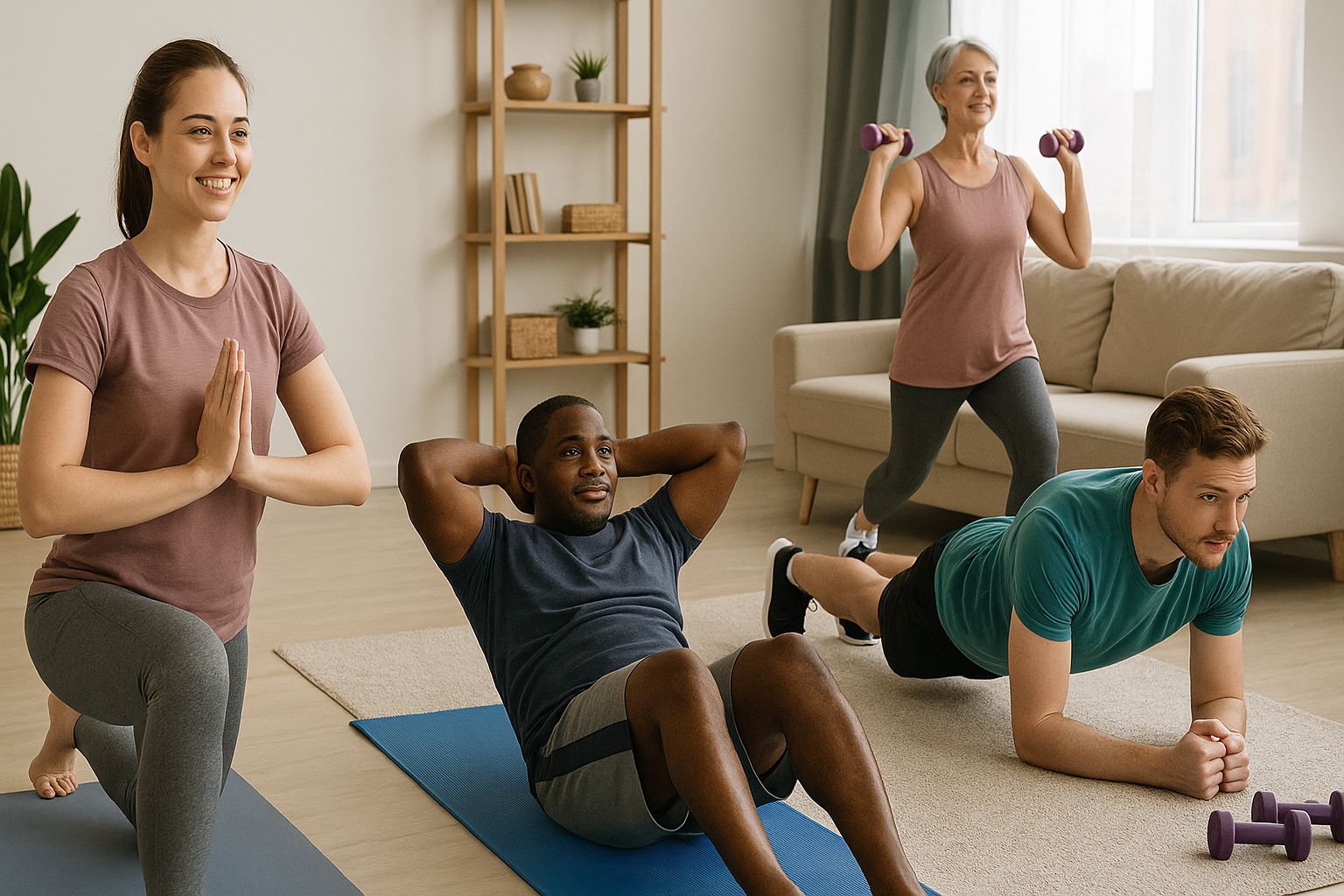
Home workouts prove that fitness truly is for everyone — no matter your age, budget, or fitness level.
1. Warm-Up: Prepare Your Body
Before jumping into exercise, it’s essential to warm up your muscles and joints. A good warm-up prevents injuries, improves flexibility, and helps your body perform better.
5-Minute Warm-Up Routine:
- March in place – 1 minute
- Arm circles – 30 seconds forward, 30 seconds backward
- Leg swings – 30 seconds each leg
- Jumping jacks – 1 minute
- Torso twists – 1 minute
These simple moves increase blood flow and prepare your muscles for the main workout.
2. Beginner-Friendly Full-Body Workout
If you’re new to exercising or haven’t worked out in a while, start with low-impact movements. These exercises are easy to follow yet effective in improving strength and endurance.
Workout Plan (Repeat 2–3 Rounds):
- Bodyweight Squats (15 reps) – Strengthens your legs and glutes.
- Knee Push-Ups (10 reps) – Builds upper body and core strength.
- Glute Bridges (15 reps) – Activates your hips and lower back.
- Standing Calf Raises (20 reps) – Improves balance and tones calves.
- Mountain Climbers (30 seconds) – Boosts heart rate for cardio.
Take a 30–60 second rest between each exercise. As you get stronger, increase repetitions or reduce rest time.
3. Core Workout: Strengthen Your Midsection
A strong core supports better posture, balance, and daily movement. These exercises target your abs and lower back — no equipment needed.
Core Circuit (Repeat 3 Rounds):
- Plank (30–45 seconds) – Builds endurance in your core muscles.
- Bicycle Crunches (15 reps per side) – Engages obliques and abs.
- Leg Raises (10–15 reps) – Strengthens lower abs.
- Russian Twists (20 reps) – Improves core rotation and stability.
- Superman Hold (30 seconds) – Strengthens your back muscles.
Consistency is key — doing core workouts three times a week can make a noticeable difference in just a few weeks.
4. Cardio at Home: Get Your Heart Pumping
Cardiovascular exercise improves your heart health, endurance, and helps burn calories. The best part? You can do cardio anywhere, even in a small space.
Cardio Workout (Repeat 3 Rounds):
- Jumping Jacks – 1 minute
- High Knees – 1 minute
- Butt Kicks – 1 minute
- Burpees – 10 reps
- Shadow Boxing – 1 minute
These moves elevate your heart rate and can be modified for your fitness level. For a low-impact version, perform the exercises slower or without jumps.
5. Strength Training with Minimal Equipment
If you have resistance bands, dumbbells, or even water bottles, you can add variety to your home workouts and challenge your muscles further.
Sample Strength Routine:
- Dumbbell Deadlifts (12 reps) – Strengthens legs and lower back.
- Shoulder Press (12 reps) – Builds upper body power.
- Bent-Over Rows (12 reps) – Works your back and arms.
- Lunges (10 reps per leg) – Improves balance and strengthens thighs.
- Bicep Curls (12 reps) – Tones your arms.
If you don’t have weights, use household items like water bottles, books, or bags filled with rice or flour as makeshift dumbbells.
6. Flexibility and Mobility: Keep Your Body Agile
Flexibility is often overlooked, but it’s a key part of staying healthy. Stretching improves posture, reduces muscle tension, and prevents stiffness — especially if you sit a lot.
Daily Stretch Routine:
- Neck rolls – 30 seconds
- Shoulder stretch – 30 seconds each arm
- Hamstring stretch – 30 seconds each leg
- Child’s Pose – 1 minute
- Cat-Cow stretch – 1 minute
Aim to stretch after every workout or at least once a day to keep your body mobile and pain-free.
7. Quick Workouts for Busy Days
Some days, you might only have 10–15 minutes to spare — and that’s fine! Short, high-intensity workouts can still deliver great results.
10-Minute HIIT Workout:
- 30 seconds Jump Squats
- 30 seconds Push-Ups
- 30 seconds Plank
- 30 seconds Lunges
- 30 seconds Rest
Repeat the circuit 3–4 times.
High-Intensity Interval Training (HIIT) boosts metabolism, burns fat, and keeps your workouts efficient. Even a few minutes can make a difference when done consistently.
8. Staying Motivated at Home
Working out at home requires discipline — but motivation can grow with the right strategies.
Tips to Stay on Track:
- Set a schedule and treat it like an appointment.
- Track your progress — write down your workouts and improvements.
- Use workout videos or apps for guidance and variety.
- Find an accountability partner — a friend or family member who joins you.
- Celebrate small wins — every step counts!
Remember, motivation comes and goes, but habits keep you consistent. Focus on building a routine, not perfection.
9. Safety Tips for Home Workouts
To stay injury-free and get the most out of your training, follow these simple precautions:
- Warm up before and cool down after each workout.
- Maintain proper form — quality matters more than quantity.
- Start slow and progress gradually.
- Listen to your body — rest if you feel pain or fatigue.
- Stay hydrated before, during, and after exercise.
Safety ensures that your workouts remain sustainable and enjoyable.
10. Building a Long-Term Fitness Lifestyle
The goal of home workouts isn’t just short-term results — it’s to create a sustainable, healthy lifestyle. You don’t need to exercise for hours every day. Even 20–30 minutes of movement daily can have a major impact on your physical and mental well-being.
Long-Term Benefits of Regular Exercise:
- Boosts energy and mood
- Improves heart and lung health
- Builds strength and endurance
- Reduces risk of chronic diseases
- Enhances focus and mental clarity
Over time, these benefits compound, helping you live a stronger, happier, and more confident life.
Final Thoughts
Fitness truly is for everyone — no matter your age, experience, or budget. You don’t need a gym or expensive equipment to take care of your health. All you need is consistency, commitment, and the will to move.
Start small, stay consistent, and enjoy the process. Each workout you complete brings you closer to a stronger, healthier version of yourself. Remember, progress takes time — but with daily effort, results will follow.