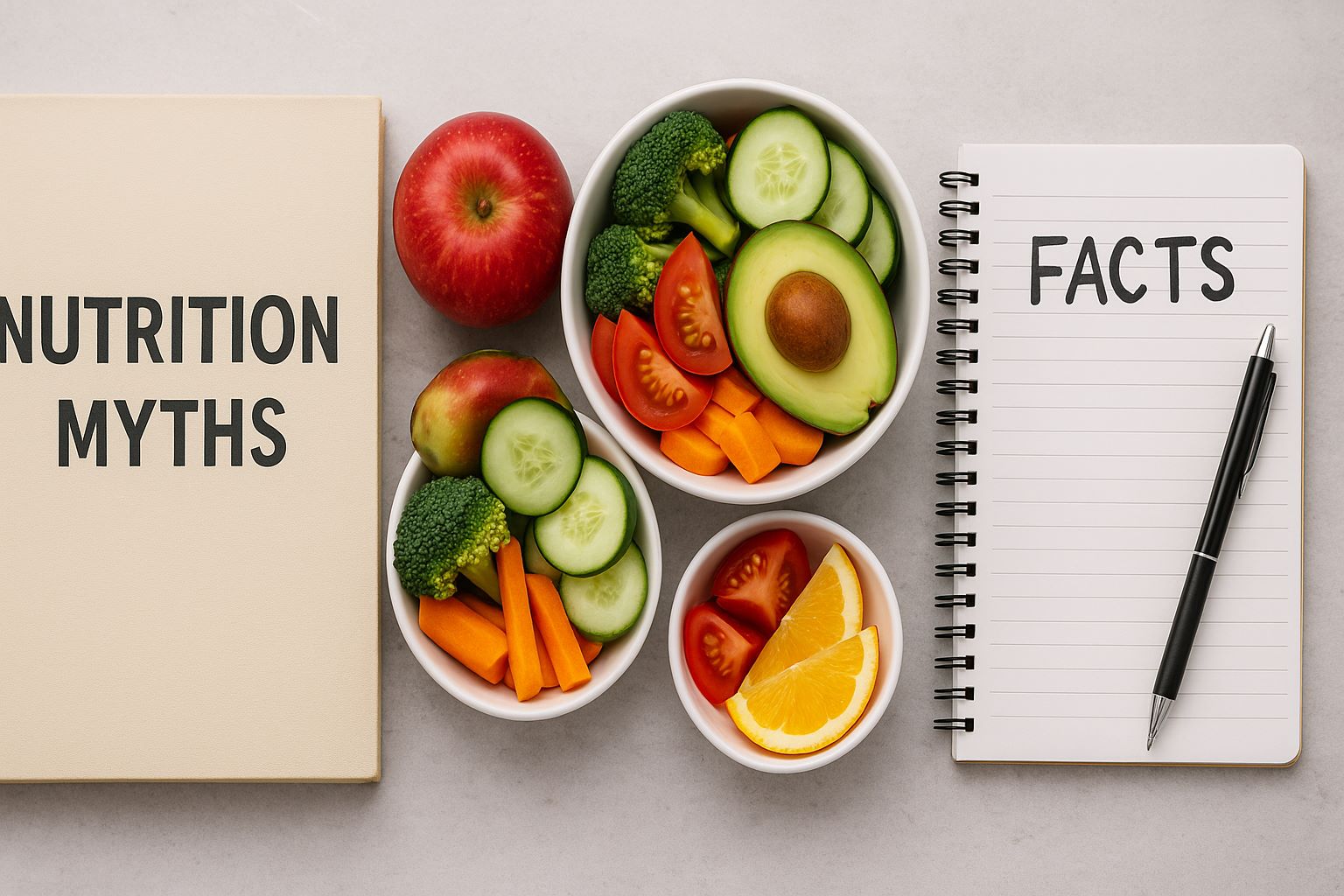
In the age of social media and online “health gurus,” nutrition advice is everywhere — and much of it is misleading. From fad diets to miracle supplements, it’s easy to get lost in a sea of conflicting information. One person says carbs are bad, another insists fat is the enemy, and someone else swears by juice cleanses.
Thank you for reading this post, don't forget to subscribe!The truth? Nutrition is not one-size-fits-all, and science often tells a very different story than popular diet trends. In this article, we’ll debunk the most common nutrition myths and reveal what modern research actually says about healthy eating.
1. Myth: Carbs Make You Gain Weight
The Truth: Not all carbs are created equal.
Carbohydrates are often labeled as the enemy, but in reality, your body needs carbs for energy. What matters is the type and quality of carbohydrates you eat.
- Refined carbs (white bread, pastries, sugary drinks) cause rapid spikes in blood sugar and can contribute to weight gain.
- Complex carbs (whole grains, fruits, vegetables, legumes) are rich in fiber and nutrients that support digestion, metabolism, and energy balance.
Research shows that whole grains and fiber-rich carbs can help with weight control by keeping you fuller for longer and improving gut health. So instead of cutting out carbs, focus on choosing healthier sources.
✅ Smart swaps: Replace white rice with brown rice, soda with fruit-infused water, and white bread with whole-grain options.
2. Myth: Eating Fat Makes You Fat
The Truth: Healthy fats are essential for your body.
For decades, dietary fat was blamed for obesity and heart disease. But new studies reveal that the right types of fat are vital for hormone production, brain function, and nutrient absorption.
There are different types of fats:
- Healthy fats: Found in avocados, olive oil, nuts, seeds, and fish. These support heart health and help lower bad cholesterol.
- Unhealthy fats: Trans fats and excessive saturated fats, found in fried and processed foods, can increase your risk of heart disease.
Healthy fats also help you feel full longer, which may prevent overeating. The key is moderation and balance — not elimination.
✅ Pro tip: Include omega-3-rich foods like salmon, chia seeds, and walnuts in your diet.
3. Myth: You Need to Eat Small Meals Every 2–3 Hours
The Truth: Meal frequency doesn’t matter as much as total calories and nutrients.
The “eat every few hours” advice became popular among fitness enthusiasts, but science shows no clear advantage to eating multiple small meals versus three larger ones.
What matters most is your total calorie intake, the quality of your food, and whether your eating pattern fits your lifestyle. Some people feel great eating three balanced meals, while others prefer smaller, more frequent meals to avoid hunger.
✅ Best approach: Listen to your body. Eat when you’re hungry and stop when you’re satisfied — not stuffed.
4. Myth: All Calories Are Equal
The Truth: Where your calories come from matters.
Technically, a calorie is a calorie — it’s a unit of energy. But your body processes different foods differently.
For example:
- 100 calories of vegetables provide vitamins, fiber, and slow-digesting carbs.
- 100 calories of candy mostly contain sugar and provide no real nutrients.
Nutrient-dense foods keep your metabolism active and support overall health, while empty-calorie foods may lead to nutrient deficiencies and cravings.
✅ Rule of thumb: Focus on quality over quantity. Choose foods that nourish your body, not just fill your stomach.
5. Myth: You Should Avoid Eating After 8 PM
The Truth: Timing matters less than what and how much you eat.
Many believe that eating late automatically leads to weight gain. However, research suggests that total daily intake and food quality are what really matter.
If you’re eating balanced meals and maintaining a calorie deficit (for weight loss), a late-night snack won’t derail your progress. The problem arises when nighttime eating includes junk food like chips or sweets.
✅ Better late-night snacks: Greek yogurt with berries, a banana with peanut butter, or a handful of nuts.
6. Myth: Detox Diets and Cleanses Remove Toxins
The Truth: Your body already detoxes naturally.
Juice cleanses, detox teas, and “cleansing” supplements are popular, but there’s no scientific evidence they actually remove toxins from your body.
Your liver, kidneys, lungs, and skin are already highly efficient at eliminating waste and toxins. Cleanses often deprive your body of essential nutrients, leading to fatigue and muscle loss.
✅ Instead of detoxing, focus on supporting your body’s natural systems:
- Drink plenty of water
- Eat fiber-rich foods
- Avoid excessive alcohol and processed foods
- Get enough sleep
Healthy habits do more for detoxification than any short-term cleanse ever could.
7. Myth: High-Protein Diets Are Bad for Your Kidneys
The Truth: For healthy individuals, protein is perfectly safe.
This myth comes from studies on people with existing kidney disease. For those with normal kidney function, protein does not cause damage — in fact, it’s essential for muscle growth, tissue repair, and immune health.
However, extremely high-protein diets without enough carbs or fats can create imbalances. The best approach is a balanced diet that includes lean proteins like chicken, eggs, tofu, lentils, and fish.
✅ Optimal protein intake: Around 0.8–1.2 grams per kilogram of body weight for most adults, depending on activity level.
8. Myth: Going Gluten-Free Is Healthier for Everyone
The Truth: Gluten is only harmful if you have an intolerance.
Gluten-free diets have become trendy, but unless you have celiac disease or gluten sensitivity, there’s no reason to avoid gluten. Whole grains that contain gluten (like wheat, barley, and rye) provide fiber, B vitamins, and minerals that benefit heart and digestive health.
Many gluten-free packaged foods are actually higher in sugar and fat, making them less healthy overall.
✅ Takeaway: Only go gluten-free if medically necessary — not because it’s trendy.
9. Myth: Supplements Can Replace Real Food
The Truth: Supplements should fill gaps, not replace meals.
While vitamins and supplements can be helpful in certain cases (like vitamin D deficiency or pregnancy), they are not a substitute for a healthy diet. Whole foods contain a complex mix of nutrients, antioxidants, and fiber that supplements can’t replicate.
✅ Use supplements wisely: Get a blood test, consult a healthcare professional, and use them to complement, not replace, nutritious meals.
10. Myth: You Must Cut Out Entire Food Groups to Be Healthy
The Truth: Balance and moderation are key.
Extreme diets that eliminate entire food groups (like carbs or dairy) often lead to nutrient deficiencies and are hard to maintain long-term. Sustainable nutrition is about balance, not restriction.
Instead of labeling foods as “good” or “bad,” focus on portion control and variety. Enjoy treats occasionally — a healthy diet is one you can stick to for life.
✅ Golden rule: Eat mostly whole, minimally processed foods — but don’t feel guilty about the occasional indulgence.
The Science-Backed Approach to Eating Well
Now that we’ve busted the biggest nutrition myths, what does science actually recommend?
Here’s what most experts agree on:
- Eat a variety of whole, unprocessed foods
- Include plenty of fruits and vegetables
- Get adequate protein from lean and plant-based sources
- Choose healthy fats over processed ones
- Stay hydrated and manage portion sizes
- Focus on consistency, not perfection
Healthy eating isn’t about following the latest diet trend — it’s about creating sustainable habits that work for your body and lifestyle.
Final Thoughts
In a world filled with misinformation, it’s easy to fall for catchy diet trends and “miracle fixes.” But when you look at what science actually says, the path to good nutrition is simple: eat real food, in the right amounts, and keep it balanced.
Don’t fear carbs, fats, or late-night snacks — just make smarter choices and stay consistent. Your body doesn’t need extremes; it needs nourishment, variety, and care.
Because true health isn’t built on fads — it’s built on facts.